







Thermo Fisher Scientific has launched the GENESYS G5 series of Visible and UV-Visible spectrophotometers, a three-model lineup the company is positioning as a configurable platform rather than a single-purpose instrument. The G5 Vis, G5 UV-Vis, and G5 UV-Vis Pro are designed to let laboratories match spend to actual needs today while retaining the option to add capability through software and accessories as requirements evolve over a five to ten year service life.
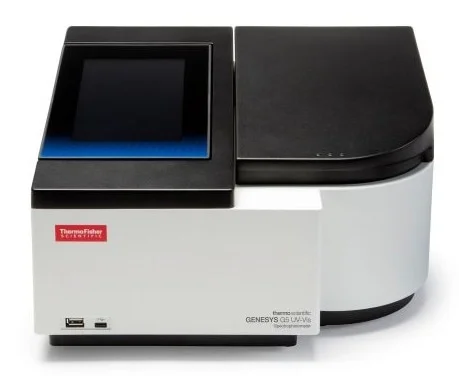
The launch is notable less for an optics breakthrough than for what it says about how Thermo Fisher sees the UV-Vis market. Benchtop UV-Vis is one of the most commoditized instrument categories a lab will ever purchase. In a field that well-populated, hardware alone rarely wins the decision. Thermo Fisher is betting that software modularity and accessory breadth matter more to labs that expect their method mix to change.
A Software Ecosystem, Not Just a Spectrophotometer
At the center of the GENESYS G5 suite is an expanded software ecosystem built around four optional application packages: water analysis, food and beverage testing, life sciences workflows, and color measurement. Each package delivers guided workflows and preconfigured methods aimed at reducing setup time and improving consistency across users. For water quality laboratories performing routine nutrient and contaminant analyses, or food and beverage producers running quality control across production environments, the value proposition is straightforward: fewer hours configuring methods and more hours running samples.
The platform also supports broad accessory compatibility, including cell changers, Peltier temperature control, sipper systems, and fiber optic probes. That accessory range lets laboratories automate workflows and customize setups for specific applications without replacing hardware, a practical advantage for labs that anticipate their analytical needs shifting over time.
Compliance Requires a Separate License
For regulated environments, the GENESYS G5 pairs with Thermo Scientific SciVault 2 software to deliver user access controls, audit trails, and electronic signatures aligned with 21 CFR Part 11 data integrity requirements. That compliance path is a meaningful differentiator in a category where many competing instruments treat regulatory support as an afterthought, but it comes with an important caveat: SciVault 2 is licensed separately from the instrument. Labs operating under GxP should budget for that software and validate the full instrument-plus-software configuration, not the hardware in isolation.
“The needs of modern laboratories continue to evolve, and customers are looking for solutions that can evolve with them,” said Lauren Ebersol, Product Manager for UV-Vis Spectroscopy at Thermo Fisher Scientific. “With GENESYS G5, we’ve built an expanded software ecosystem on top of proven UV-Vis performance, enabling laboratories to streamline routine testing and support more advanced workflows.”
Who Benefits Most
Academic and teaching labs represent the segment Thermo Fisher highlights first. The combination of rugged onboard operation, guided methods, and a tiered product range suits rotating student users and instructors who need instrument access without constant babysitting. A department that buys once wants headroom for later, and the upgrade path from G5 Vis to UV-Vis Pro delivers exactly that.
For routine QC labs in water, environmental, and food and beverage sectors, the application packages are the real draw. Preconfigured methods reduce operator variability and cut setup time, which matters when the same instrument runs the same assays day after day across multiple users. The cost of those packages should be factored into any comparison, because it is the guided workflows, not the base optics, that distinguish this platform from a plain fixed-wavelength unit.
Pricing
Thermo Fisher has not published G5 pricing at launch, so treat any number you hear as a quote rather than a list price. Before committing, request per-model specifications in writing, including bandwidth, wavelength range, and optical geometry. Arrange a demo on your own samples, and for regulated work, confirm the intended-use status of your exact model and software combination against your quality requirements.
The GENESYS G5 makes a strong case for labs that value one hardware family they can reconfigure over years. In a mature category where the hardware differences between vendors have narrowed, Thermo Fisher is staking its claim on the software ecosystem around the instrument. For labs with broad or growing method sets.
