







DNA isolation is a technique used to extract DNA from biological samples, which can then be used for genetic analysis and cloning. It is a key step in many biological experiments, such as PCR and cloning.
How to isolate DNA
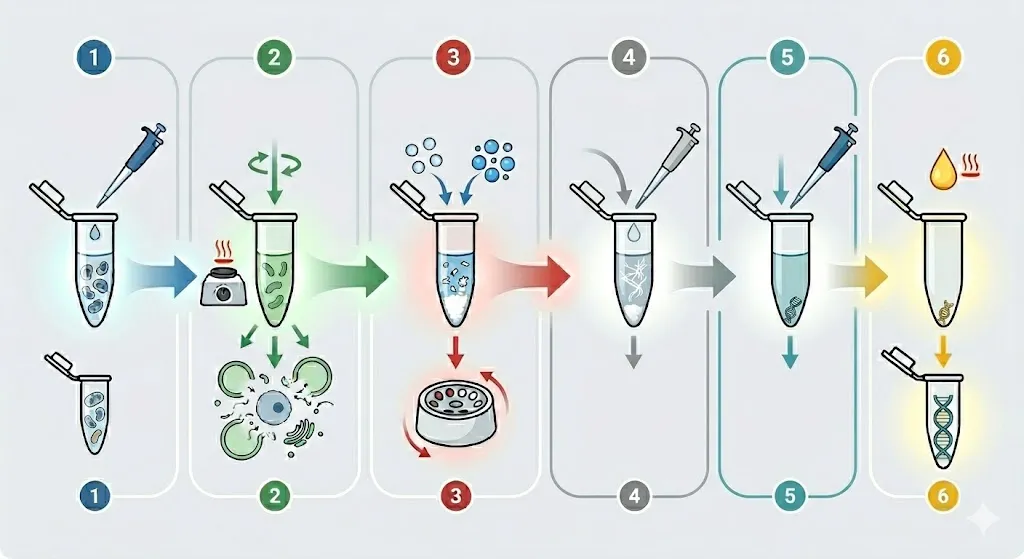
The procedure relies on a series of chemical and physical steps to break the membranes of the cell while keeping the fragile DNA strands intact.
- Lysis
The first step is to break open the cells. This is done using a lysis buffer, which typically contains detergents (like SDS) to dissolve the fatty cell membranes and enzymes (like Proteinase K) to chew up the proteins that keep the DNA tightly coiled. In some cases, mechanical force, like grinding a sample in liquid nitrogen, is used to smash through tough cell walls.
- Protein removal and purification
Once the cells are burst, you’re left with a “lysate”, a messy soup of DNA, RNA, proteins, and lipids. To separate the DNA, scientists often add concentrated salts or organic solvents (like phenol-chloroform). This causes the proteins to clump together and sink, while the DNA remains dissolved in the liquid layer. The sample is spun in a centrifuge, which forces the heavy debris to the bottom, leaving the DNA-rich liquid on top.
- Precipitation
DNA is soluble in water but insoluble in alcohol. By adding ice-cold ethanol or isopropanol, the DNA molecules are forced to clump together and become visible to the naked eye. It often looks like thin, white, snot-like threads or a small white pellet at the bottom of the tube.
- Wash and Resuspension
The DNA pellet is washed with 70% ethanol to remove any remaining salts or contaminants. Finally, the alcohol is evaporated, and the purified DNA is redissolved (resuspended) in TE buffer (Tris-EDTA) or nuclease-free water. This “pure gold” can now be stored in a freezer for years or used immediately for experiments.


