



Antibody Structure and Function
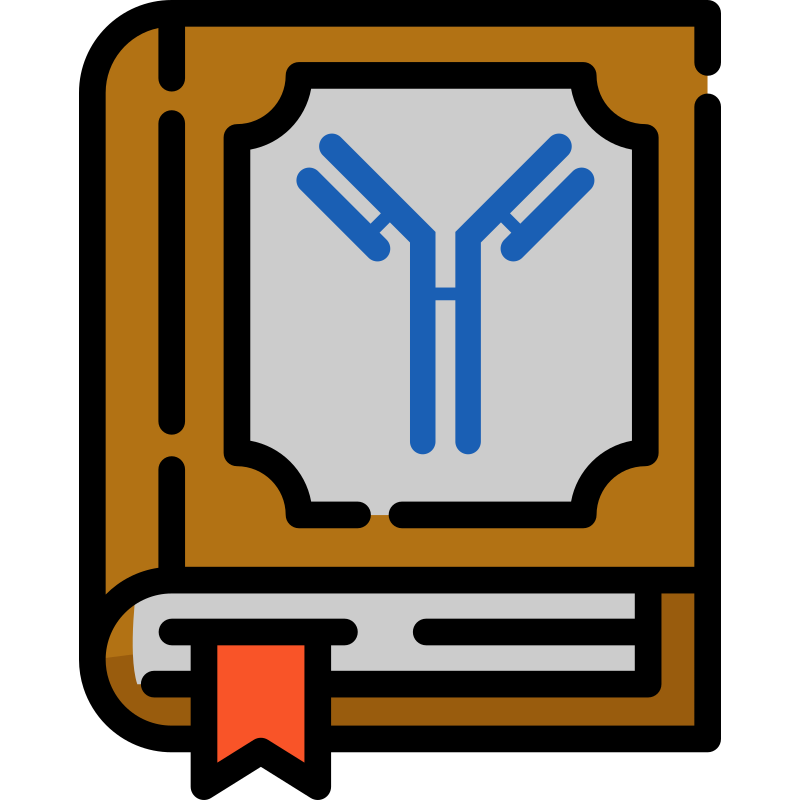
Antibodies are Y-shaped glycoproteins produced by B cells that recognize and neutralize pathogens through specific antigen-binding sites.
Biology Protein Degradation
Protein degradation is a highly regulated process that removes damaged, misfolded, or unneeded proteins through the ubiquitin-proteasome system and autophagy.
Biology Protein Folding and Chaperones
Protein folding is the process by which a linear polypeptide chain adopts its native three-dimensional structure, often with the assistance of molecular chaperones.
Biology Protein-Protein Interactions
Protein-protein interactions are the physical contacts between proteins that underlie all cellular processes, from signal transduction to gene expression.
Biology Proteomics and Mass Spectrometry
Proteomics is the large-scale study of proteins, their structures, functions, interactions, and modifications, with mass spectrometry as the primary analytical technology.
Biology Antioxidants and Free Radicals
Free radicals and reactive oxygen species are produced during normal metabolism and can cause cellular damage that is counteracted by enzymatic and non-enzymatic antioxidant systems.
Biology Fat-Soluble Vitamins
Fat-soluble vitamins A, D, E, and K are hydrophobic compounds that require dietary fat for absorption and are stored in the liver and adipose tissue.
Biology Minerals in Biochemistry
Dietary minerals are essential inorganic elements that serve as enzyme cofactors, structural components, and electrolytes in cellular function.
Biology Vitamin Deficiency Disorders
Vitamin deficiencies cause specific disease states that reflect the biochemical functions of each vitamin, affecting metabolism, development, and immune function.
Biology Water-Soluble Vitamins
Water-soluble vitamins include the B-complex group and vitamin C, which function primarily as coenzymes in metabolic reactions and must be obtained from the diet.
Biology Carbohydrate Digestion and Absorption
Carbohydrate digestion breaks down dietary polysaccharides and disaccharides into monosaccharides that can be absorbed across the intestinal epithelium.
Biology Carbohydrate Structure & Classification
Carbohydrates are the most abundant biomolecules on Earth, serving as energy sources, structural components, and recognition elements in living organisms.
Biology